
4 Benefits of Jump Rope Training for Muay Thai, Boxing & MMA
When people think about conditioning for combat sports, running is usually the first thing that comes to mind. Fighters have been pounding pavement for decades, building endurance mile after mile.
But what if running isn’t an option?
Whether you’re dealing with joint pain, recovering from injuries, short on time, or simply looking for a more sport-specific conditioning tool, jump rope may be one of the best investments you can make in your training.
I haven’t run regularly in years. In fact, I used to compete in triathlons, but the wear and tear eventually caught up to me. My doctor recommended that I stop running, and that search for alternative conditioning methods is what ultimately led me deeper into martial arts training.
Today, jump rope remains one of my favorite tools for improving conditioning, footwork, timing, and overall fight performance.
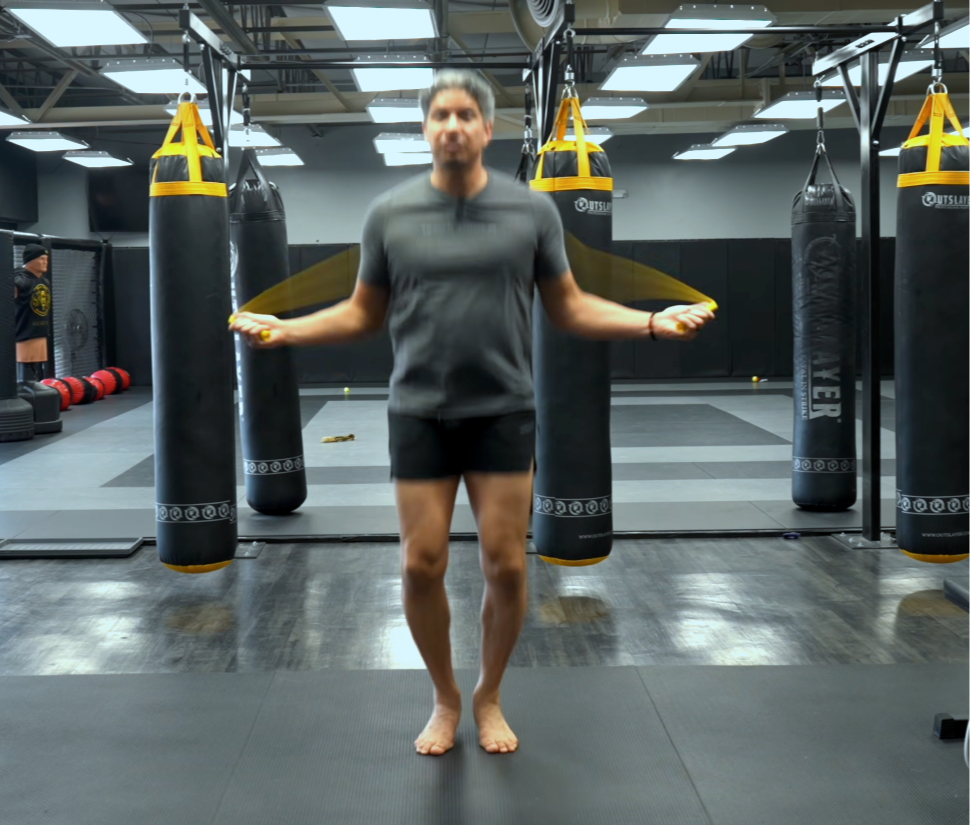
1. Jump Rope Builds Excellent Fight Conditioning
One of the biggest benefits of jump rope training is cardiovascular conditioning.
Unlike steady-state jogging, jump rope forces your body to work continuously while coordinating multiple movements at once. Your heart rate climbs quickly, your lungs are challenged, and your muscular endurance improves.
Many coaches consider 10 minutes of quality jump rope work comparable to a much longer running session. Whether that’s continuous skipping, interval training, or alternating speeds, you’ll quickly discover that jumping rope is no joke.
For fighters, this matters because combat sports require repeated bursts of effort combined with sustained endurance. Jump rope helps develop both.
Benefits Include:
* Improved cardiovascular endurance
* Increased lung capacity
* Better recovery between rounds
* Higher work output during training sessions
2. It Improves Vertical Force Production
One concept I discuss frequently is vertical force production.
In striking sports like Muay Thai, boxing, and MMA, power doesn’t start with the hands. It starts from the ground.
Every punch, kick, knee, and explosive movement relies on your ability to generate force through your feet and transfer it through your body.
Jump rope strengthens many of the structures responsible for that force production, including:
* Achilles tendons
* Calves
* Knees
* Glutes
* Stabilizing muscles of the lower body
The repeated bouncing action teaches your body to store and release energy efficiently, helping you become more explosive and athletic.
3. It Teaches You to Stay Light on Your Feet
One of the most common issues I see with beginner fighters is heavy footwork.
They plant their feet too long, move slowly, and struggle to create angles.
Jump rope helps solve this problem.
To skip efficiently, you must stay relaxed, balanced, and light on your feet. Over time, those qualities begin to carry over into your martial arts training.
As your Achilles tendons, calves, and lower body become stronger, you’ll notice improvements in:
* Movement speed
* Footwork
* Agility
* Balance
* Ring mobility
The result is smoother movement and better positioning during sparring and competition.
4. Jump Rope Develops Timing and Coordination
Timing is one of the most overlooked benefits of jump rope training.
Every successful jump requires coordination between your hands, feet, eyes, and rhythm.
Miss the timing and you’ll immediately know it.
As you become more comfortable with basic skipping, you can progress into boxing-style footwork, side-to-side movement, double unders, and speed variations.
These drills help improve:
* Rhythm
* Coordination
* Hand-foot synchronization
* Athletic timing
For fighters, timing is everything. Better timing means better footwork, cleaner combinations, and improved reaction speed.
How Often Should Fighters Jump Rope?
You don’t need to spend hours on a jump rope to see results.
Start with:
* 5 to 10 minutes before training
* 3 to 5 sessions per week
* Short intervals if you’re a beginner
As your conditioning improves, you can gradually increase duration and intensity.
Consistency is more important than marathon sessions.
Final Thoughts
If you’re looking for a simple, affordable, and effective way to improve your fight conditioning, jump rope should be part of your training routine.
It improves conditioning, strengthens key athletic structures, develops footwork, enhances timing, and carries over directly into combat sports performance.
Whether you’re training Muay Thai, boxing, MMA, kickboxing, or simply looking to improve your fitness, adding a few jump rope sessions each week can make a noticeable difference.
Don’t worry if you’re not great at it right away. Like any skill, it takes practice. Stick with it, stay consistent, and you’ll reap the rewards both inside and outside the gym.
